1. Material Scientific Research and Structural Honesty
1.1 Crystal Chemistry and Bonding Characteristics
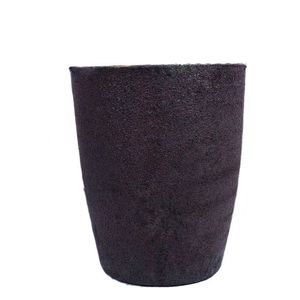
(Silicon Carbide Crucibles)
Silicon carbide (SiC) is a covalent ceramic made up of silicon and carbon atoms prepared in a tetrahedral latticework, largely in hexagonal (4H, 6H) or cubic (3C) polytypes, each displaying phenomenal atomic bond stamina.
The Si– C bond, with a bond power of roughly 318 kJ/mol, is among the greatest in architectural ceramics, providing outstanding thermal stability, firmness, and resistance to chemical assault.
This durable covalent network results in a material with a melting point exceeding 2700 ° C(sublimes), making it one of one of the most refractory non-oxide ceramics offered for high-temperature applications.
Unlike oxide ceramics such as alumina, SiC maintains mechanical strength and creep resistance at temperatures above 1400 ° C, where numerous steels and standard porcelains start to soften or weaken.
Its low coefficient of thermal growth (~ 4.0 × 10 ⁻⁶/ K) combined with high thermal conductivity (80– 120 W/(m · K)) makes it possible for fast thermal biking without tragic fracturing, a crucial characteristic for crucible efficiency.
These innate buildings stem from the balanced electronegativity and comparable atomic sizes of silicon and carbon, which advertise a highly stable and densely loaded crystal structure.
1.2 Microstructure and Mechanical Strength
Silicon carbide crucibles are usually made from sintered or reaction-bonded SiC powders, with microstructure playing a decisive function in resilience and thermal shock resistance.
Sintered SiC crucibles are produced via solid-state or liquid-phase sintering at temperature levels over 2000 ° C, frequently with boron or carbon additives to enhance densification and grain boundary cohesion.
This process generates a fully dense, fine-grained framework with marginal porosity (
Advanced Ceramics founded on October 17, 2012, is a high-tech enterprise committed to the research and development, production, processing, sales and technical services of ceramic relative materials and products. Our products includes but not limited to Boron Carbide Ceramic Products, Boron Nitride Ceramic Products, Silicon Carbide Ceramic Products, Silicon Nitride Ceramic Products, Zirconium Dioxide Ceramic Products, etc. If you are interested, please feel free to contact us.
Tags: Silicon Carbide Crucibles, Silicon Carbide Ceramic, Silicon Carbide Ceramic Crucibles
All articles and pictures are from the Internet. If there are any copyright issues, please contact us in time to delete.
Inquiry us